
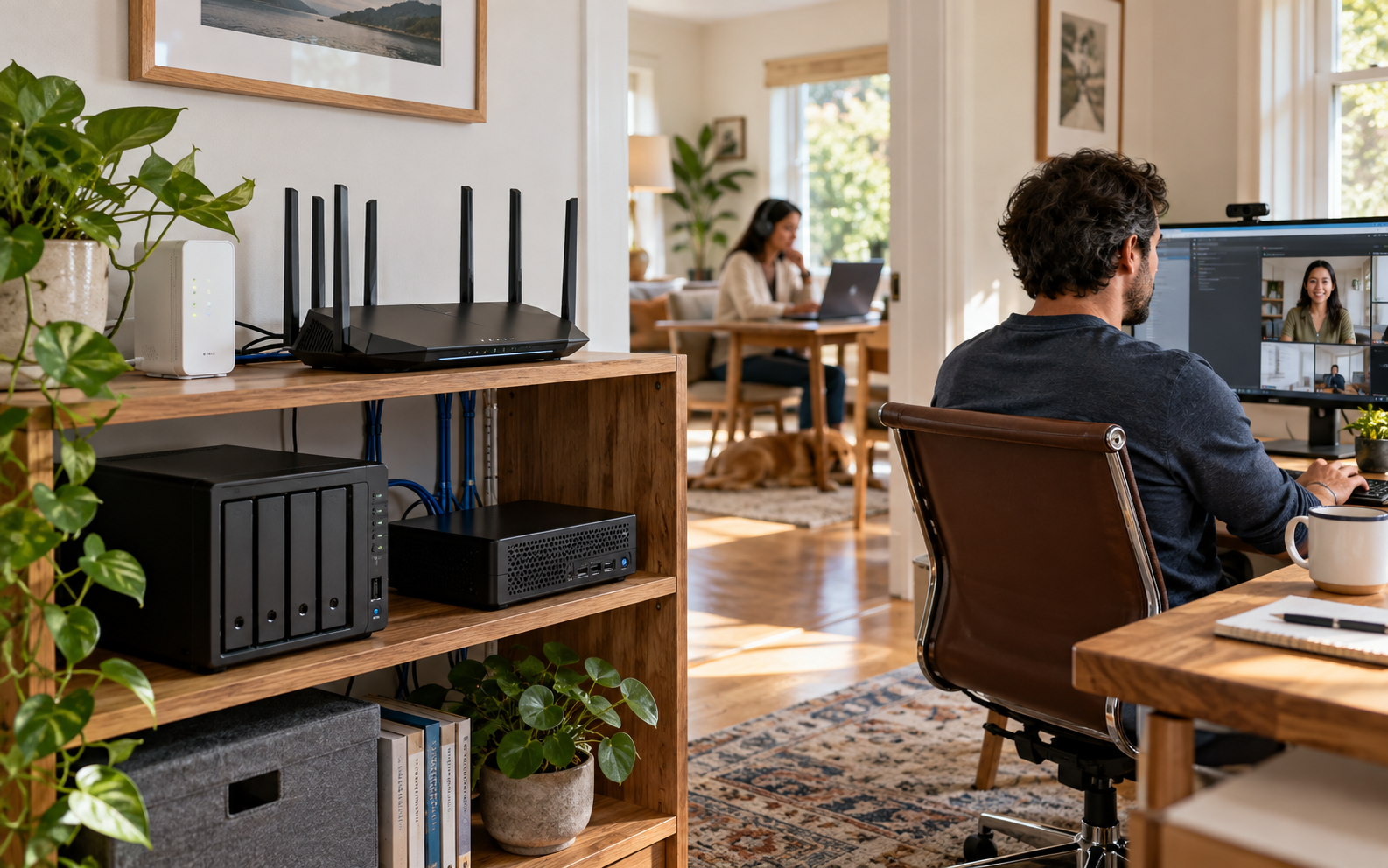
Picture this: two people taking simultaneous video calls while a desktop, NAS, television, and multi-gig internet connection share one home network. That ordinary moment is the useful test. A product succeeds here only when it removes friction without introducing a new maintenance ritual, privacy surprise, or setup problem.
Quick verdict
The Archer BE600 is a practical TP-Link Wi-Fi 7 recommendation for a wired-heavy home that can use its 10GbE and multiple 2.5GbE ports; homes with ordinary broadband and mostly older Wi-Fi clients should not buy it for the BE9700 label alone. This recommendation is about fit, not a numeric score. Product quality can vary by model, firmware, room, and retailer support, so the final choice should be checked against the exact item you are considering.
Three-bedroom homes with multi-gig internet, a NAS or workstation, and newer Wi-Fi 6E or Wi-Fi 7 clients
Your broadband is below a gigabit, dead zones clearly require multiple nodes, or most important clients are wired at 1GbE
The real-life scenario
In this use case, convenience is only valuable when it survives a normal week: hurried mornings, imperfect Wi-Fi, shared spaces, cleaning, charging, and people who do not want to study a manual. We look for controls that make sense under pressure, maintenance that is easy to remember, and a fallback when the smart feature fails.
The right product should also fit the physical room. Measure clearances, cable paths, door swings, listening distance, storage, and access to power or drainage as relevant. Those details rarely headline a product page, yet they decide whether the purchase feels useful after the first month.
Tradeoffs to accept before buying
- Headline aggregate wireless speed is not the speed of one phone or laptop
- A single router can still struggle with concrete, long floor plans, or poor placement
- Some HomeShield features and advanced services may have current subscription or account requirements
What to check on the exact product
Confirm this against the exact model, room, and routine before paying.
Confirm this against the exact model, room, and routine before paying.
Confirm this against the exact model, room, and routine before paying.
A low-friction setup plan
- Inventory WAN speed and wired-port needs before disconnecting the current router
- Update firmware, create a separate guest or IoT network where appropriate, and use strong admin credentials
- Test work calls and large wired transfers from real rooms before adding an EasyMesh extender
Keep the first setup deliberately small. Confirm the core job works, learn the reset procedure, and save receipts, serial numbers, recovery codes, and warranty details. Add optional apps or automations only after the basic workflow is dependable.
Who should buy—and who should wait
Buy for this scenario: Three-bedroom homes with multi-gig internet, a NAS or workstation, and newer Wi-Fi 6E or Wi-Fi 7 clients. The product category is a strong fit when the core job happens often enough to justify the storage, charging, cleaning, subscription, or learning cost.
Wait or choose a simpler alternative: Your broadband is below a gigabit, dead zones clearly require multiple nodes, or most important clients are wired at 1GbE. A lower-tech tool is often the better choice when it is faster, easier to share, and less dependent on an account or app.
The wired layout is the clearest reason to choose this model
Archer BE600 combines one 10GbE WAN/LAN port, one 2.5GbE WAN/LAN port, and three additional 2.5GbE LAN ports. That is unusually useful for a home with a fast fiber handoff, desktop, access point, and NAS. Count the actual endpoints first; unused multi-gig ports are expensive decoration.
Wi-Fi 7 helps only where the whole path supports it
The router publishes tri-band BE9700 capacity across 6 GHz, 5 GHz, and 2.4 GHz, plus MLO for compatible clients. Real application speed is bounded by the client radio, distance, interference, server, wired uplink, and internet service. A strong result is a stable call and fast local transfer, not reproducing an aggregate box number.
Placement still beats antenna count
Six external antennas cannot make a utility closet transparent. Place the router openly, above floor level, and near the rooms that matter. If a long or multi-story home still has weak zones, use Ethernet backhaul or a measured EasyMesh plan rather than raising transmit power and hoping every client can answer back.
Published specifications that change the decision
Alternatives worth comparing
- Archer BE550 when its lower tier and port mix meet the measured network
- A Deco Wi-Fi 7 kit when multi-node coverage matters more than one router's port density
- A good Wi-Fi 6 router when most clients and broadband remain below multi-gig speeds
TP-Link Archer BE600
A tri-band BE9700 Wi-Fi 7 router to compare for multi-gig internet, 10GbE or 2.5GbE wired devices, and a three-bedroom home where one well-placed router fits.
Retailer link checked November 17, 2026. This is an affiliate link, so Review Radar Daily may earn a commission from a qualifying purchase at no added cost to you. Price, seller, and availability can change.FAQ
Will Archer BE600 make every device Wi-Fi 7?
No. Older devices keep using the Wi-Fi generation and band their own radios support.
Is it a mesh system?
It is a standalone router with EasyMesh compatibility. Additional compatible routers or extenders can be added if measured coverage requires them.
Who benefits from the 10GbE port?
Homes with multi-gig service, fast local storage, or other 10GbE equipment can use it. A normal 1Gbps path remains the bottleneck otherwise.
Source and verification note
Primary or authoritative reference checked October 11, 2026: tp-link.com, tp-link.com. Product availability, software features, prices, and terms can change; verify the exact model and current retailer information before purchase.