
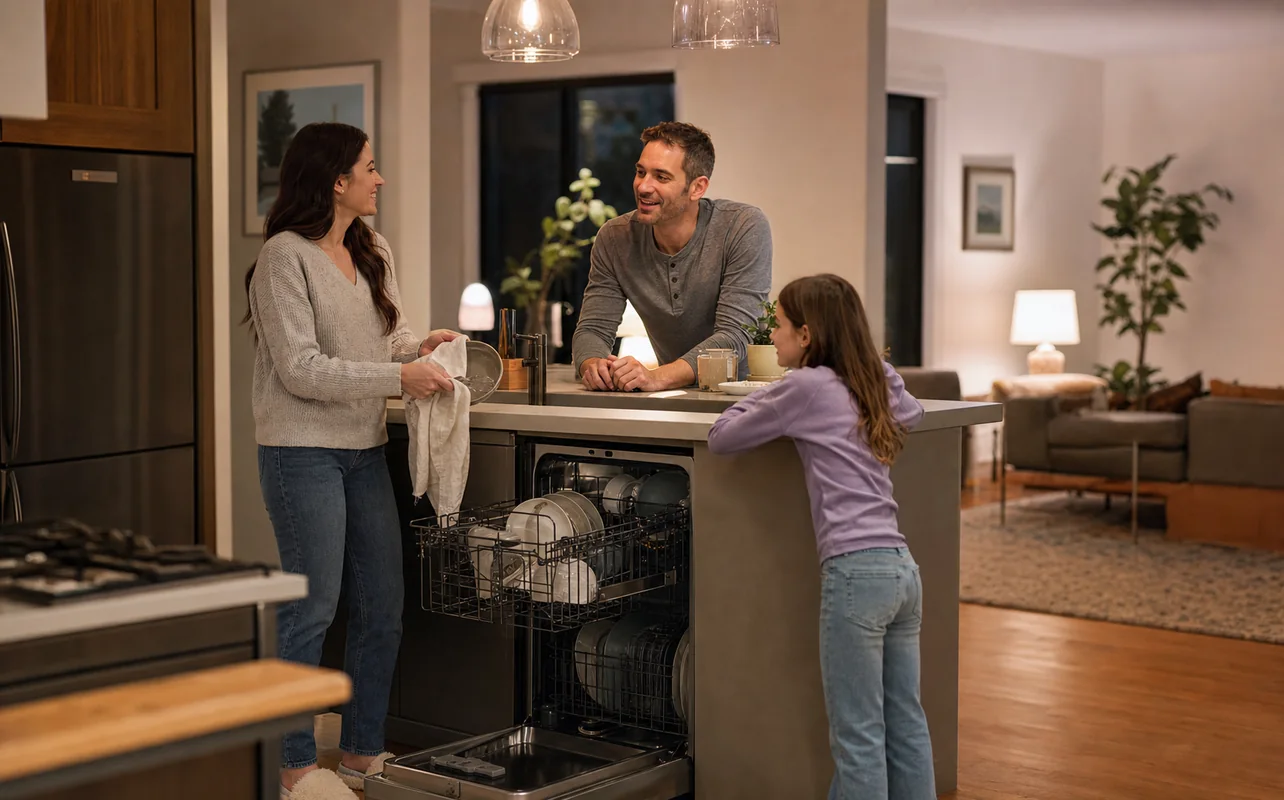
Picture this: a large household filling bottles and a coffee maker during the same busy kitchen morning. That ordinary moment is the useful test. A product succeeds here only when it removes friction without introducing a new maintenance ritual, privacy surprise, or setup problem.
Quick verdict
Based on published specifications, the Waterdrop X16 is a high-throughput under-sink RO system for genuinely busy kitchens; smaller households should compare filter cost, cabinet fit, and actual flow needs before paying for maximum capacity. This recommendation is about fit, not a numeric score. Product quality can vary by model, firmware, room, and retailer support, so the final choice should be checked against the exact item you are considering.
Large households that regularly need several fast draws of filtered water
You lack a nearby outlet, cannot alter plumbing, or have modest daily demand
The real-life scenario
In this use case, convenience is only valuable when it survives a normal week: hurried mornings, imperfect Wi-Fi, shared spaces, cleaning, charging, and people who do not want to study a manual. We look for controls that make sense under pressure, maintenance that is easy to remember, and a fallback when the smart feature fails.
The right product should also fit the physical room. Measure clearances, cable paths, door swings, listening distance, storage, and access to power or drainage as relevant. Those details rarely headline a product page, yet they decide whether the purchase feels useful after the first month.
Tradeoffs to accept before buying
- The 1,600 GPD headline describes maximum production capacity, not a promise about every home's tap pressure
- Tankless RO still needs drain, feed-water, faucet, and electrical connections
- Remineralization changes taste but does not make the water medically superior
What to check on the exact product
Confirm this against the exact model, room, and routine before paying.
Confirm this against the exact model, room, and routine before paying.
Confirm this against the exact model, room, and routine before paying.
A low-friction setup plan
- Measure the cabinet and photograph the plumbing before ordering
- Confirm an appropriate grounded outlet and faucet-hole plan
- Flush and inspect every connection according to the manual before routine use
Keep the first setup deliberately small. Confirm the core job works, learn the reset procedure, and save receipts, serial numbers, recovery codes, and warranty details. Add optional apps or automations only after the basic workflow is dependable.
Who should buy—and who should wait
Buy for this scenario: Large households that regularly need several fast draws of filtered water. The product category is a strong fit when the core job happens often enough to justify the storage, charging, cleaning, subscription, or learning cost.
Wait or choose a simpler alternative: You lack a nearby outlet, cannot alter plumbing, or have modest daily demand. A lower-tech tool is often the better choice when it is faster, easier to share, and less dependent on an account or app.
What the X16 changes in daily use
The official listing centers the X16 on a 1,600 GPD maximum production rate, a 3:1 pure-to-drain ratio, an 11-stage treatment description, remineralization, and a digital faucet. The practical benefit is not a bigger number on the cabinet; it is less waiting when bottles, kettles, and cooking vessels are filled back-to-back. Actual output can still vary with temperature, pressure, membrane condition, and incoming water.
The ownership cost is the real comparison
A fast system becomes frustrating if replacement filters are difficult to source or the cabinet cannot be serviced. Before buying, price the complete filter set, note each replacement interval, and leave enough side and front clearance for removal. Review the performance data sheet for the specific contaminants tested rather than treating a stage count as a universal performance score.
Published specifications that change the decision
Alternatives worth comparing
- Waterdrop X12 for a lower-capacity 1,200 GPD system
- Waterdrop G3P800 when 800 GPD is enough and UV is a priority
- A certified non-RO filter when dissolved-solids reduction is not required
Waterdrop X16
A high-flow 1,600 GPD tankless reverse-osmosis system to compare for large households that have the under-sink space, power outlet, and installation access it requires.
Retailer link checked September 8, 2026. It opens an Amazon search for this exact model; price, seller, and availability can change. No Amazon Associates tracking ID is currently attached.FAQ
Is 1,600 GPD necessary for a normal family?
Often not. It is most relevant when fast, repeated draws matter; household size alone does not prove the need.
Does the X16 require electricity?
Yes. The manufacturer lists electricity as required, so outlet location is part of installation planning.
Does it add minerals back?
The official listing describes an alkaline-mineral stage; verify the current filter configuration and performance data sheet.
Source and verification note
Primary or authoritative reference checked September 8, 2026: waterdropfilter.com. Product availability, software features, prices, and terms can change; verify the exact model and current retailer information before purchase.